
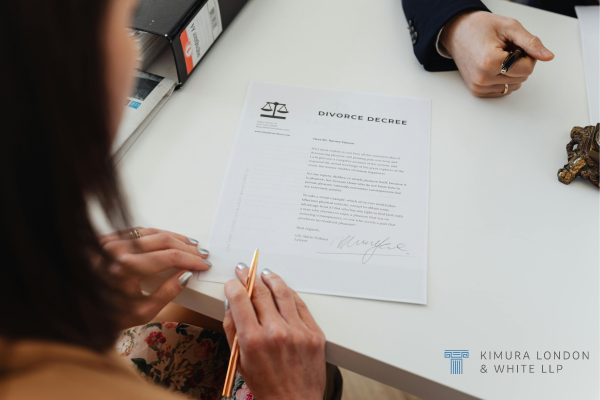
That moment your heart drops to the floor is unforgettable. A stranger hands you an envelope, and suddenly your whole world feels like it's tilting. Looking at the documents, you're hit with a flood of questions, but one shouts the loudest: if I am served divorce papers do I have to sign them?
You might think signing is admitting defeat or agreeing to terms you haven't even had a chance to process. It's a common fear, and it comes from a place of not knowing what happens next. The confusion you're feeling right now is completely normal, because a question like "if I am served divorce papers do I have to sign them" is about more than just a signature; it's about your future. For peace of mind and further assistance, give our team a call at 949-474-0940.
Let's break down what this really means, so you can take your next step with confidence instead of fear. This guide will walk you through the process so you can handle it effectively.
Table Of Contents:
- What 'Being Served' Actually Means
- The Big Misconception: Signing Does Not Mean Agreeing
- What Happens if You Refuse to Sign the Papers?
- So, Should I Sign When I Get Served Divorce Papers?
- Let's Talk About a "Response" vs. a "Default"
- Navigating Different Types of Divorce
- If I Am Served Divorce Papers Do I Have to Sign Them or Something Else?
- When You Absolutely Should Not Sign
- Frequently Asked Questions
- Conclusion
What 'Being Served' Actually Means
First, let's clear up what "being served" is all about. It is the official legal process of notifying you that a lawsuit has been started against you. In this situation, the lawsuit is a petition for divorce, sometimes called a divorce complaint.
The main purpose is to make sure you cannot later claim you were unaware of the spouse divorce proceeding. The court needs proof that you received the documents, and this formal delivery provides that proof. When papers are served, it officially begins the legal process and starts the clock on your deadline to respond.
Think of it as a formal notice from the court system. Once you've received the papers, the court considers you officially informed of the divorce filed by your spouse. This is step one in the divorce process, a necessary formality for the case to move forward.
The Big Misconception: Signing Does Not Mean Agreeing
This is probably the most important thing to understand right now. In most instances, the paper you're asked to sign when you're served is not the divorce agreement itself. It is usually a document called an "Acknowledgment of Service" or a "Proof of Service" form.
Signing this service form simply tells the court, "Yes, I received a copy of the divorce petition on this date." Signing the papers simply acknowledges receipt of the documents filed with the court. You are not agreeing to the terms outlined in the divorce petition, giving up any rights, or admitting to any claims your spouse has made.
A signed acknowledgment of service is just a receipt. By signing it, you save your spouse the expense and effort of hiring a professional to prove you received the papers. This can help the process start on a less confrontational note.
What Happens if You Refuse to Sign the Papers?
Your first instinct might be to refuse to sign divorce papers. You might believe that if you don't sign, the divorce cannot happen. Unfortunately, that is not how the legal system works.
A divorce can and will proceed even if you refuse to sign the Acknowledgment of Service. Your refusal doesn't stop the legal process; it just complicates it. If you don't respond or sign, your spouse must use another method to prove to the court that you received the divorce papers served to you.
This often means hiring a professional process server or the local sheriff's department. Their job is to find you and personally deliver the documents. They might come to your home, your workplace, or another location, which can be embarrassing and stressful.
Once they hand you the papers, they will file a sworn statement with the court confirming the delivery. At that point, you are legally considered served, whether you signed anything or not. The judge may also order you to pay the costs your spouse incurred to have you professionally served.
So, Should I Sign When I Get Served Divorce Papers?
Generally, signing the Acknowledgment of Service is the easiest and most practical thing to do. It shows the court that you are willing to participate in the divorce proceedings cooperatively. More importantly, it marks the official start date for your response time frame.
The most critical action after being served is to file a formal response with the court. This is your official answer to the divorce petition. You typically have a limited amount of time to do this; the specific number of court days varies by state but is often around 30 days.
This formal response is where you have your say. In this document, you inform the court which parts of your spouse's requests you agree with and which you contest. This is how you protect your rights regarding child custody, property division, and spousal support.
Let's Talk About a "Response" vs. a "Default"
Ignoring the papers is the worst thing you can do. Once you're served, the clock is ticking, and you have two main paths: you can file a Response, or you can do nothing and risk a default judgment. These two outcomes are worlds apart and have vastly different impacts on your divorce case.
Filing a Response: Your Voice in the Divorce
Your Response is your voice in the legal proceeding. It is the tool you use to communicate with the court and your spouse about what you want. If you seek child custody, child support, or your fair share of marital assets, you must state that in your Response.
Filing this document makes you an active participant in your own divorce. It tells the judge that there are two sides to this story and that your perspective needs to be heard. It prevents your spouse from making all the decisions for you and ensures the court considers your needs and rights.
The Danger of a "Default" Judgment
If you don't file a Response within the legal time limit, you are essentially silent. The court will assume you have nothing to say and do not contest what your spouse has asked for in the divorce petition. This can lead to what is called a default judgment.
A default judgment means the court can grant your spouse almost everything they requested in their initial petition, and you will have no say in the matter. The judge can make a final court order about your children, your home, your savings, and your debts without ever hearing your side. Reversing a default judgment is very difficult, expensive, and often impossible.
| Action | Filing a Response | Allowing a Default Judgment |
|---|---|---|
|
Participation |
You are an active participant in the divorce. |
You are a non-participant; decisions are made without you. |
|
Your Rights |
You can state your position on all contested issues like child custody and asset division. |
You give up your right to be heard by the court. |
|
Outcome |
You can negotiate terms and work toward a fair settlement, or have a judge decide based on both sides. |
The judge is likely to grant your spouse's requests as written in the petition. |
|
Cost & Effort |
Requires filing fees and legal work but protects your long-term interests. |
Requires no initial effort but can be financially devastating and difficult to appeal. |
Navigating Different Types of Divorce
Once you decide to respond, it's helpful to understand the different paths your divorce might take. The approach can vary depending on whether you and your spouse agree on the key issues. Your legal options will differ based on the type of divorce proceeding.
An uncontested divorce occurs when both spouses agree on all major issues. This includes property division, spousal support, and arrangements for any children. If you and your spouse agree, the process can be much faster and less expensive.
A contested divorce, on the other hand, means there are one or more contested issues you cannot agree on. These disagreements can relate to anything from asset division to child custody. These cases often require more negotiation, mediation, or even a court hearing for a judge to decide.
A third path is collaborative divorce. In this process, both parties and their attorneys agree to work together to resolve issues without going to court. It's a structured, cooperative approach that focuses on finding mutually agreeable solutions.
If I Am Served Divorce Papers Do I Have to Sign Them or Something Else?
Let's circle back to the main question and put it all together. The short answer to "if I am served divorce papers do I have to sign them" is no, you don't have to sign the initial service form. However, it is often a good idea to sign the Acknowledgment of Service to keep the process simple and less expensive.
The signature that truly matters comes much later in the divorce process. You may be asked to sign a final Marital Settlement Agreement or a Stipulated Judgment. These are very different documents from the initial service paperwork.
Signing a final agreement means you are agreeing to every single term written in it, from financial details to parenting plans. This document becomes a legally binding court order. You should never sign a final settlement agreement without having a family law attorney review it carefully first.
When You Absolutely Should Not Sign
While signing the initial service form is usually harmless, there are documents that carry immense weight. That final settlement agreement is one of them. It lays out the plan for dividing all your assets, who pays which debts, the schedule for your children, and any support payments.
Signing this document locks you into those terms permanently. It is the final handshake, and once it is done, the divorce is granted based on those terms. It's crucial to understand that your signature has lasting consequences for your entire future.
This is why getting legal representation from an experienced divorce attorney is so important. An experienced family law attorney can review the proposed agreement, identify unfavorable terms, and help you negotiate terms that are fair and protect your rights. Do not let pressure from your spouse or anyone else rush you into signing something you do not fully understand.
Frequently Asked Questions
Here are some frequently asked questions that come up after a person is served divorce papers.
- How long do I have to respond after I'm served? The time frame to file a formal response varies by state. It is commonly 20 to 30 days, but it is critical to check your local court rules or consult with a divorce lawyer to confirm the exact deadline for your divorce case.
- What if my spouse and I agree on everything? If you and your spouse agree on all issues, you can pursue an uncontested divorce. This is a much simpler process where you file a settlement agreement with the court. However, it's still a good idea to have an attorney review the documents to ensure your rights are protected.
- Do I need a lawyer if the divorce is amicable? Even in an amicable spouse divorce, consulting a family law attorney is wise. An experienced family attorney can identify complex issues you may have overlooked, explain your legal options, and ensure the documents filed with the court are correctly prepared to prevent future problems. Their practice areas cover all aspects of a divorce proceeding.
- What should be in my Response? Your Response should address each of the spouse's requests in the divorce petition. You should state whether you agree or disagree with their claims regarding property, debts, child custody, child support, and spousal support. This is your opportunity to make your own requests to the court.
Conclusion
Being served with divorce papers is a shocking and stressful event. But now you know the answer to the critical question, "if I am served divorce papers do I have to sign them?" That first signature is likely just about acknowledging you received the papers, not about agreeing to the divorce itself or any of its terms.
The truly crucial step is what you do next. Ignoring the situation is not an option, because that allows decisions about your life to be made without you. Taking action by filing a Response with the court is how you stand up for yourself, protect your interests, and make sure your voice is heard throughout the legal process.
This is a difficult time, but understanding how the process works is the first step toward getting through it. Seeking advice from an experienced divorce lawyer can provide the clarity and support you need to make informed decisions for your future.

Comments
There are no comments for this post. Be the first and Add your Comment below.
Leave a Comment