
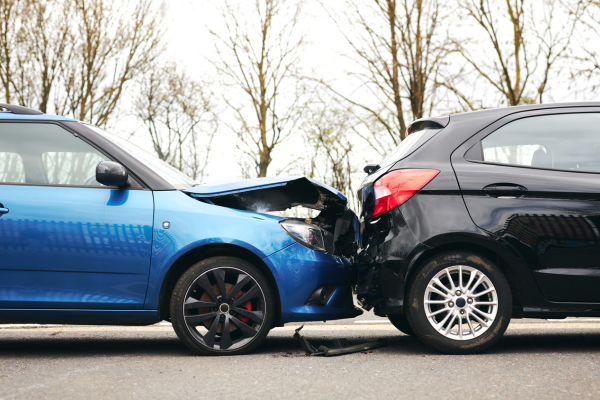
The sound of crunching metal is something you never forget. Your heart pounds in your chest as you try to process what just happened. After making sure everyone is okay, the other driver sheepishly admits they do not have car insurance.
The shock and stress can feel overwhelming when you get hit by an uninsured driver in California. How to file UM UIM and other claims suddenly becomes your most urgent question. You followed the rules and got insurance, but now you are left wondering who will pay for the damage and your injuries.
You're not alone in this feeling of frustration, as many people feel lost and angry in this exact situation. It feels unfair because you did everything right. This guide will walk you through the steps you need to take after a car accident with an uninsured driver in California, making sure you can file all necessary motorist claims effectively.
The team at Kimura London & White LLP is ready to help you get justice for your injuries and the compensation you deserve. Give our team a call at 949-474-0940 for help today.
Table Of Contents:
- What Happens Immediately After an Uninsured Driver Hits You?
- Understanding California's Car Insurance Laws
- Your Own Insurance Is Now Your Lifeline: Understanding UM/UIM
- Hit by an Uninsured Driver in California? How to File UM UIM and Other Claims
- Why You Might Need a Lawyer for a UM/UIM Claim
- What Other Claims Can You Make?
- UIM Claim Checklist
- Conclusion
What Happens Immediately After an Uninsured Driver Hits You?
Your actions right after the crash are incredibly important. They set the foundation for any claim you will make later. Staying calm and following a few key steps can protect your health and your financial future.
Safety First, Always
Your first priority is everyone's well-being. If you can, move your motor vehicle to the side of the road to avoid more danger. Check yourself and your passengers for any injuries.
Even if you feel fine, adrenaline can hide pain from a bodily injury. It is always a good idea to call 911. Paramedics can check for injuries, and law enforcement can create an official report of the incident.
Always check the following after an accident:
Gathering Critical Information
This part is vital for your claim, so you must provide evidence of what happened. The other driver might be hesitant to give information because they know they are in trouble. But you should try to get their name, address, phone number, and driver's license number.
Also, be sure to get their license plate number and the make, model, and color of their car. If there are any witnesses, ask for their names and phone numbers. Their statements could be very helpful for your case.
Use your phone to take pictures of everything, including the property damage to both motor vehicles, the license plates, and the accident scene itself. These photos are crucial evidence for your insurance claims.
The Importance of a Police Report
Having a police report is non-negotiable, as it serves as the official record of the accident. The report will document the other driver's admission that they do not have auto insurance. When you file a claim with your own insurance company, this report is the primary piece of evidence.
It confirms the details of the crash and validates your claim that the at-fault driver was an uninsured driver. Without it, proving the other driver was uninsured and at fault becomes much harder.
Understanding California's Car Insurance Laws
California operates under an "at-fault" system for car accidents. This means the person who caused the accident is responsible for paying for the damages. This system relies on drivers carrying liability insurance.
The state has specific minimum liability insurance requirements. According to the California Department of Motor Vehicles, every driver must meet the state's financial responsibility laws. The most common way to do this is to buy insurance that meets the minimum coverage levels.
These minimums are $15,000 for injury or death to one person, $30,000 for injury or death to more than one person, and $5,000 for property damage. However, there are other, less common ways to satisfy these liability insurance requirements as outlined in the Vehicle Code.
- A surety bond for $35,000 from a company licensed to do business in California.
- A cash deposit of $35,000 made with the DMV.
- A certificate of self-insurance issued by the DMV, which is typically only an option for large companies.
Despite these rules, many drivers on the road ignore the law. The Insurance Research Council found that about 16.6% of California drivers were uninsured in 2019. This high number of uninsured drivers shows why having your own protective motorist coverage is so important.
Your Own Insurance Is Now Your Lifeline: Understanding UM/UIM
When the at-fault driver has no insurance, you have to turn to your own insurance policy. This is where Uninsured and Underinsured Motorist (UM/UIM) coverage becomes a true lifesaver. Hopefully, you chose to add this valuable insurance cover to your automobile insurance policy.
What is Uninsured Motorist (UM) Coverage?
Uninsured Motorist coverage, also known as uninsured motorist, protects you when you're hit by a driver with no insurance at all. It typically comes in two parts. The cost automobile insurance program you select determines your level of protection.
Uninsured Motorist Bodily Injury (UMBI) is a crucial part of uninsured motorist coverage. It covers your medical bills, lost wages from missing work, and compensation for your pain and suffering. It's designed to cover the same things the at-fault driver's liability coverage would have paid for if they had it.
Uninsured Motorist Property Damage (UMPD) can help pay for car repairs to your vehicle. This coverage pays up to a set limit, which in California is $3,500, and it only applies if the uninsured driver is identified. It's a critical safety net when you're facing thousands in repair costs for a vehicle owned by you.
What about Underinsured Motorist (UIM) Coverage?
Sometimes the at-fault driver has insurance, but it is not enough to cover all your costs. This is common because many drivers only carry the state's legal minimum, which often fails to cover a serious bodily injury. This creates a situation with an underinsured driver.
If your medical bills are $50,000, but the other driver's liability limit only covers $15,000, you are left with a big gap. Underinsured Motorist coverage, or UIM coverage, fills that gap. The purpose of this insurance program is to protect responsible drivers.
It steps in to cover the difference between your total damages and the other driver's liability limits. To use UIM coverage, you must first collect the full policy limit from the underinsured driver's insurance company. This protects you from having to pay for someone else's mistake out of your own pocket.
| Type of Coverage | What It Covers | Who Pays for It |
|---|---|---|
|
Uninsured Motorist Bodily Injury (UMBI) |
Your medical bills, lost wages, and pain & suffering. |
Your own insurance company. |
|
Uninsured Motorist Property Damage (UMPD) |
Repairs to your vehicle up to $3,500 (if you don't have collision). |
Your own insurance company. |
|
Underinsured Motorist (UIM) |
The gap between your damages and the at-fault driver's low policy limits. |
Your own insurance company. |
|
Collision Coverage |
Repairs to your vehicle, regardless of fault (deductible applies). |
Your own insurance company. |
Hit by an Uninsured Driver in California? How to File UM UIM and Other Claims
Now that you know what coverage can help, let's go over the process. Filing a claim correctly and building a strong case is essential. Follow these steps carefully to protect your rights.
Step 1: Notify Your Own Insurance Company
You must tell your insurance company about the accident as soon as possible. Most policies have a deadline for reporting accidents, so do not delay. It helps to insurance understand your policy's specific requirements before you need them.
Stick to the facts when you speak with them. Simply explain what happened without guessing or admitting any fault.
Give them the police report number and the information you collected at the scene. This starts the official process of filing insurance claims with one of the state's insurance companies.
Step 2: Formally Open a UM/UIM Claim
Reporting the accident is not the same as opening a UM/UIM claim. You need to specifically tell your insurance company that you want to start a claim under this part of your policy. They will then assign an adjuster to your case.
This adjuster will request assistance by asking for documentation to support your uninsured motorist claim. This includes the police report, medical records and bills, and proof of any lost wages from your employer. Being organized will speed up the process.
Step 3: Document Everything
Your ability to get fair compensation depends on your records. Create a file for everything related to the accident. Keep copies of every medical bill, receipt, and communication with your insurance company.
Make notes after every phone call, including the date, time, and what you discussed. This detailed record is your power. It helps you build a solid case and shows the full extent of your losses for your personal injury.
Why You Might Need a Lawyer for a UM/UIM Claim
You might think that because you are dealing with your own insurance company, things will be easy. Unfortunately, that is often not the case. Your insurance company is still a business, and its goal is to minimize payouts and control insurance costs.
In this scenario, your insurer now stands in the shoes of the uninsured driver. This creates an adversarial situation where your own insurance provider becomes your opponent. They may try to offer you a quick, low settlement or even deny your claim based on fine print in your automobile insurance policy.
This is where having an experienced attorney can make a huge difference. A reputable law firm that handles personal injury and underinsured motorist cases knows how to handle insurance companies. A good attorney can answer questions about insurance laws and your specific situation.
Firms like Kimura London & White LLP focus on these cases and are prepared to go to trial, which pressures insurers to offer a fair settlement from the start. Founding partner Joshua M. Kimura is recognized as a SuperLawyer and knows how to fight for his clients. One client said he "left no stone unturned" to get them the compensation they deserved for their car accident.
What Other Claims Can You Make?
Besides your UM/UIM coverage, you might have other options on your policy. These can give more help while your main claim is being processed. It's a good idea to review your private passenger insurance policy to see what you have.
Medical Payments Coverage (MedPay)
MedPay is another valuable piece of coverage to add when you buy insurance. It helps pay for your and your passengers' medical expenses, no matter who was at fault for the accident. It often has a lower limit, perhaps a few thousand dollars, but it pays out quickly.
This money can be used to cover your health insurance deductibles, co-pays, and other immediate medical costs. It provides fast financial relief while you wait for your larger uninsured motorist coverage claim to settle. This coordination between your MedPay and your health insurance company is a huge benefit.
Collision Coverage
If you have collision coverage, you can use it to repair your vehicle. You will have to pay your deductible first. Your insurance company will then pay for the rest of the repair costs, up to your car's actual cash value.
Your insurer might try to recover the money they paid, including your deductible, from the uninsured driver. This process is called subrogation. However, because uninsured drivers often don't have money or assets, getting your deductible back this way is not always successful.
Suing the Uninsured Driver Directly
You always have the right to file a personal injury lawsuit against the person who hit you. This is one of the legal options available. If you win, a court can order them to pay for your damages, including property damage and medical bills.
But this path has its own challenges. The biggest issue is that someone driving without minimum liability insurance likely does not have the money to pay a judgment. You could win in court but never see a dime.
An experienced law firm can look into the driver's financial situation to see if a lawsuit is even worth pursuing. This investigation helps determine if the uninsured driver has any assets that could be used to pay what you are owed.
UIM Claim Checklist
Dealing with a car accident is tough. It gets even harder when the other driver has no insurance. In California, about 17% of drivers are uninsured. If you're hit by one, don't panic. You have options, especially if you have Uninsured Motorist (UM) or Underinsured Motorist (UIM) coverage. Here's a checklist to guide you.
- Report the Accident: Call the police right away. Get a police report. This report is key for your insurance claim. Also, file an accident report with the DMV.
- Seek Medical Attention: Your health is what matters. See a doctor even if you feel okay. Some injuries show up later. Keep records of all treatments.
- Notify Your Insurance Company: Tell your insurer about the accident. Even if it wasn't your fault, you need to report it. Start a UM/UIM claim if the at-fault driver is uninsured or underinsured.
- Gather Evidence: Collect everything you can. Get photos of the accident scene. Write down what happened. Get contact info from witnesses.
- Review Your Insurance Policy: Know your coverage limits. Understand your UM/UIM policy. This tells you how much you can claim.
- Consult with an Attorney: This is very important. A lawyer who knows UM/UIM claims can help. They can deal with the insurance company. Firms like Kimura London & White LLP in Irvine, California, specialize in these cases. They can help you get a fair settlement. They have a 98.2% success rate in car accident cases.
- Document Everything: Keep copies of all documents. This includes medical bills and lost wage statements. Good records make your claim stronger.
- Negotiate a Settlement: The insurance company might offer a low amount. Don't accept the first offer. Work with your attorney to negotiate for what you deserve.
- File a Lawsuit if Needed: If you can't settle, you might need to sue. In California, there are deadlines to file a lawsuit. Make sure you don't miss them.
Conclusion
Getting hit by an uninsured driver in California can turn your life upside down. The path to getting compensation for your vehicle liability and injuries can be filled with frustration and red tape. Knowing how to file UM UIM and other claims is your first step toward recovery.
Your main source of help will likely come from your own insurance policy, especially your uninsured motorist coverage and underinsured motorist coverage. Remember to act quickly after a car accident, document everything carefully, and understand your policy's benefits like collision coverage and MedPay. The minimum liability insurance required by law in California is often not enough.
Because you may have to fight your own insurance company for a fair settlement, getting expert legal help from a law firm that is well-versed in motorist claims can be a smart move. You do not have to handle this complicated process by yourself. You can seek the right help to protect your financial future.
At Kimura London & White LLP we are known for fighting for our clients. We aim to get settlements that are "significantly more" than initial offers. Joshua M. Kimura is a recognized "SuperLawyer." The firm offers a "No Win, No Fee" promise. This means you don't pay unless we win your case. Dealing with an uninsured driver is stressful. But with the right steps, you can protect your rights. You can also get the compensation you need.

Comments
There are no comments for this post. Be the first and Add your Comment below.
Leave a Comment