
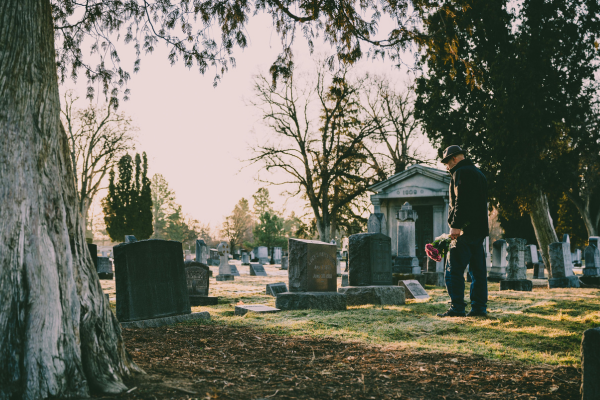
Losing someone you love is one of life's most shattering experiences. The grief can feel overwhelming, and it becomes even more complicated when that loss was sudden and preventable. You are left with questions, anger, and a void that cannot be filled.
It feels unfair because it is unfair. If you're asking, "What is a wrongful death in California?", you are likely going through this pain and looking for answers. This is a journey no one should walk alone.
Understanding what a California wrongful death is represents the first step toward finding some measure of justice for your loved one. It is a legal term, but it acknowledges that a life was cut short because of someone else's mistake or bad decision. Partner Joshua Kimura is one of the top wrongful death lawyers in the U.S. and has helped many clients find justice in their situations. Contact our team by calling 949-474-0940 or fill out a confidential contact form.
Table of Contents:
- California's Legal Definition of Wrongful Death
- Who is Allowed to File a Wrongful Death Claim?
- Common Examples of Wrongful Death Cases
- Answering "What is a wrongful death in california?" and What You Must Prove
- What Kinds of Damages Can Be Claimed?
- Be Aware of the Statute of Limitations
- Conclusion
California's Legal Definition of Wrongful Death
Let's break down the official language, as it is important to know the law that governs these claims. California law provides a specific definition for wrongful death. This definition comes directly from the California Code of Civil Procedure section 377.60.
A wrongful death happens when a person dies because of the "wrongful act or neglect of another." Think of it this way: if the person who passed away could have filed a personal injury claim had they lived, then their surviving family members may have a wrongful death case. This sounds technical, but the idea is simple.
Someone else's action or inaction caused a death. The California laws now grant certain people close to the deceased the right to seek justice. They can file a wrongful death action to hold the responsible party accountable through the state's civil court system.
This is a civil action, separate from any criminal charges. While a drunk driver might face criminal DUI and homicide charges from the state, the victim's family can bring a wrongful death lawsuit in a civil trial to seek financial compensation for their losses. The standards of proof are different, and a wrongful death claim can be successful even if there are no criminal charges.
Who is Allowed to File a Wrongful Death Claim?
Not just anyone can file this type of lawsuit. The law is very specific about who has the right to bring a claim, which is meant to protect the victim's closest family members and dependents. The system is set up in a hierarchy; if people in the first group exist, they are the ones who can file.
If no one from the first group is available, the law looks to the next group. A wrongful death lawyer can help determine which heirs are entitled to file. Here is who can file wrongful death claims in California:
- The deceased person's surviving spouse.
- The deceased person's domestic partner.
- The deceased person's surviving children.
But what if the person who passed away didn't have a spouse or children? The law then allows others to step forward. These individuals would be entitled to the decedent's property through what's called intestate succession, which is the legal process for distributing property when someone dies without a will.
This typically includes the deceased person's parents or siblings. In some cases, a personal representative of the estate can bring the wrongful death lawsuit on behalf of these eligible heirs. This ensures that the process follows proper civil procedure and protects the interests of all potential beneficiaries.
California law also makes room for others who depended on the deceased. This can include a putative spouse, children of a putative spouse, stepchildren, or parents, as long as they can show they were financially dependent on the person who died. This recognizes that families today come in many different forms, and financial dependence is a key factor.
We have a short video on this here.
Common Examples of Wrongful Death Cases
A wrongful death can result from almost any kind of personal injury situation. It is not limited to one specific type of accident and happens across many different scenarios. Let's look at some of the more frequent causes we see in a California wrongful death case.
Traffic Accidents
This is sadly one of the most common causes. These incidents can involve cars, trucks, motorcycles, and pedestrians. A fatal car accident often happens because a driver was being negligent.
Many auto accidents are the direct result of a clear violation of a duty of care owed to other drivers. For example, a driver in Santa Rosa might cause a fatal collision by running a red light while texting. Examples of negligence that often lead to death claims include:
- Driving under the influence of drugs or alcohol.
- Distracted driving, such as texting or using a cell phone.
- Reckless speeding or breaking other traffic laws.
- Fatigued driving, which can impair judgment as much as alcohol.
- Failure to yield the right-of-way to pedestrians or other vehicles.
Medical Malpractice
We trust doctors and hospitals with our lives. Sometimes, that trust is broken through a careless mistake or a failure to follow accepted medical standards. A medical professional failing to give a proper standard of care can lead to a patient's death.
These medical malpractice cases can be complex and often require expert testimony to establish negligence. Proving that a healthcare provider's action or inaction directly caused the death is a central challenge. Medical malpractice cases might involve:
- Surgical errors or mistakes made during anesthesia.
- A wrong diagnosis or a failure to diagnose a serious condition like cancer or a heart attack.
- Birth injuries that result in the death of the infant or mother.
- Prescription drug errors by a doctor or pharmacist.
Workplace Incidents
Employers have a legal duty to keep their employees safe on the job. When they fail, deadly accidents can occur. This is especially true in high-risk industries like construction, manufacturing, and transportation, but it can happen in any workplace.
A lack of proper safety equipment, inadequate training, or faulty machinery can have tragic results. While workers' compensation typically covers workplace deaths, a wrongful death lawsuit might be possible if the death was caused by a third party's negligence (not the employer) or if the employer's actions were exceptionally reckless. Understanding your rights under employment law is important in these situations.
Defective Products
Sometimes a product we buy and use is not safe. Manufacturers and distributors have a responsibility to sell products that do not pose an unreasonable risk to consumers. A product liability claim arises when a faulty product causes a death.
A poorly designed car part, such as faulty brakes or airbags, a defective home appliance that causes a fire, or a dangerous medication with undisclosed side effects can all cause a fatal injury. In these cases, the family may bring wrongful death lawsuits against the manufacturer, designer, or retailer of the defective products.
Premises Liability
Property owners need to maintain a reasonably safe environment for visitors. This applies to private homes, businesses, and public spaces. A deadly accident that occurs because of a hazardous condition on the property can lead to a premises liability lawsuit.
Examples include a fatal slip and fall on a slippery floor without a warning sign, a drowning in an unfenced swimming pool, or an assault in an apartment building with poor security. The owner could be held responsible for the death if they knew or should have known about the danger and failed to take reasonable steps to fix it.
Answering "What is a wrongful death in California?" and What You Must Prove
To have a successful wrongful death claim, you and your wrongful death attorney must prove a few specific things in court. Think of them as building blocks for your case. Without all of them, the case cannot stand, which helps answer "What is a wrongful death in California?" in a legal sense.
Your death attorney must present compelling evidence to a judge or a California civil jury for each of these elements. Following the correct civil jury instructions is essential for a successful wrongful case. Below are the four core elements of a wrongful death claim.
| Element | Explanation |
|---|---|
|
Duty of Care |
The defendant had a legal responsibility to act with a certain level of care towards the person who died. |
|
Breach of Duty |
The defendant failed to meet that responsibility through a negligent or intentional act. |
|
Causation |
The defendant's breach of duty was a direct and substantial factor in causing the death. |
|
Damages |
The death resulted in measurable harm and losses to the surviving family members. |
Duty of Care
First, you have to show that the person or entity you are suing (the defendant) owed a duty of care to the person who died. This is a legal obligation to act with a certain level of caution and concern for others. For example, all drivers have a duty to operate their vehicles safely and obey traffic laws to protect others on the road.
Breach of Duty
Next, you must prove that the defendant breached, or violated, that duty. This is the "wrongful act or neglect" part of the California code. Using the driver example, speeding or running a red light would be a breach of their duty to drive safely.
A doctor who fails to order a standard medical test might have breached their duty of care to a patient. Evidence such as police reports, witness statements, and expert analysis is often used to establish this breach.
Causation
This is a critical link. You must show that the defendant's breach of duty was a direct and substantial cause of the person's death. The accident or mistake must be the reason the death occurred.
It is not enough to show that the defendant acted carelessly; that carelessness must be directly linked to the fatal outcome. For example, you must prove the speeding driver caused the fatal crash, not some other unrelated factor. According to legal experts at Cornell Law School, proving causation in a lawsuit is a key element in showing fault.
Damages
Finally, you must show that the death caused you and other heirs to suffer measurable harm, which the law personalizes as damages. This isn't just about financial loss; it also includes the immense emotional loss your family has experienced. Proving these damages is how the court measures the impact of the loss on the surviving family members.
What Kinds of Damages Can Be Claimed?
No amount of money can ever bring a loved one back. But the legal system uses financial compensation, or damages, to provide some measure of justice for the surviving family. These damages fall into two main categories.
Economic Damages
These are the tangible financial losses that the family has suffered and will suffer because of the death. They are things you can calculate and put a specific dollar amount on, often with the help of financial experts. The damages include calculations for future lost support.
Economic damages may include:
- The financial support the deceased would have contributed to the family.
- The loss of gifts or benefits the heirs would have expected to receive.
- Funeral and burial expenses.
- The reasonable value of household services the deceased would have provided.
Non-Economic Damages
These damages are for the human loss. They are much harder to calculate because they relate to the profound emotional impact of the death. You can't put a price on love and companionship, but the law requires a California civil jury to assign a monetary value to this loss based on evidence presented at trial.
Non-economic damages cover the loss of:
- Love, companionship, comfort, care, and protection.
- The guidance and training that a parent would have provided.
- The enjoyment of sexual relations with a spouse.
It's important to know that in a wrongful death claim itself, you typically cannot get punitive damages in California. Punitive damages are meant to punish the wrongdoer for extreme misconduct. However, a separate but related claim called a "survival action" can sometimes be filed by the decedent's estate, which might allow for punitive damages if the defendant's conduct involved malice or fraud.
Be Aware of the Statute of Limitations
This is an incredibly important point. In California, you have a limited time to file a wrongful death lawsuit. This deadline is known as the statute of limitations.
For most wrongful death cases, you have two years from the date of the person's death to file your claim in the appropriate Superior Court. This is spelled out in the California Code of Civil Procedure section 335.1. The decision to bring wrongful death claims is difficult, but this deadline is strict.
If you miss this deadline, you will likely lose your right to sue forever. While there are some very rare exceptions, you should not count on them. It is very important to contact a death lawyer promptly to protect your legal rights and begin the process to bring wrongful action before it's too late.
Conclusion
The pain of losing a family member is something you never truly get over. When that loss happened because of someone's carelessness, the injustice can be even harder to bear. Getting answers to your question about "What is a wrongful death in California?" is the first step in a long process of healing and seeking accountability.
It is about understanding that you and your family have rights. While a lawsuit cannot change the past, it can help provide a more secure future for your family. A successful claim sends a message that negligence has consequences and that your loved one's life had immense value.

Comments
There are no comments for this post. Be the first and Add your Comment below.
Leave a Comment